
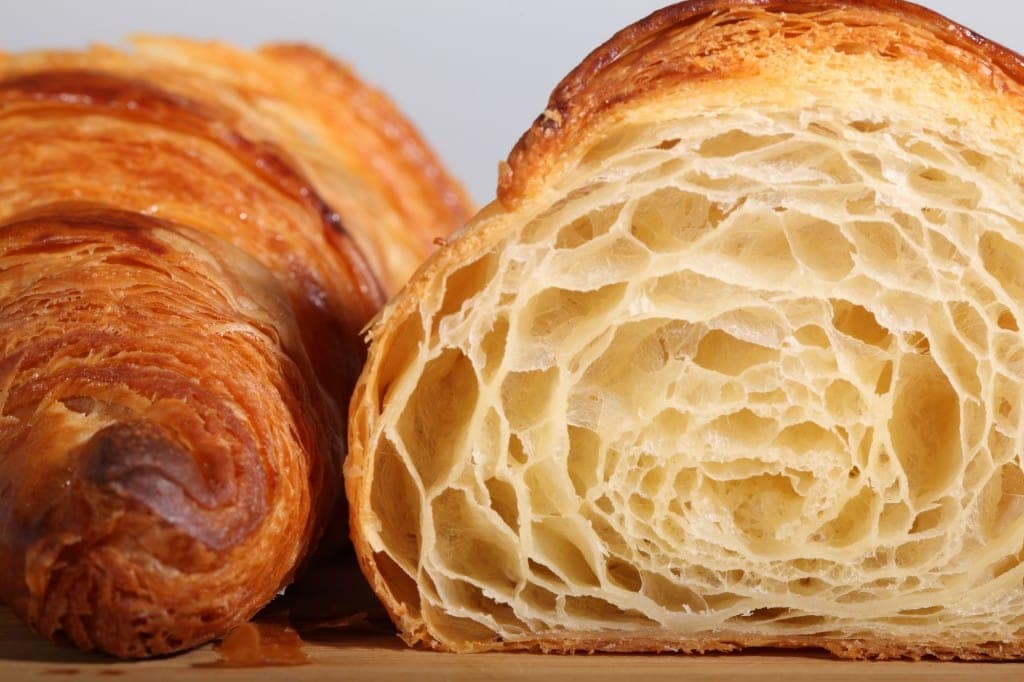
Today we are conquering our fears and making homemade croissants! If you’re about to run away from making these; yes I understand. I’m not sugar-coating it: croissants aren’t easy. Croissants require time, patience, and a lot of rolling. However, i have made these an easy recipe to follow so do not worry! You can absolutely handle this recipe. ♥
This recipe is a detailed roadmap to making bakery-quality light, flaky croissants in your own kitchen. With a pastry as technical as croissants, some aspects of the process — gauging the butter temperature, learning how much pressure to apply to the dough while rolling — become easier with experience. If you stick to this script, buttery homemade croissants are squarely within your reach.

The good news! You need zero fancy equipment and zero special ingredients.
Let’s get right into it. Making croissants is a labor of love. The long recipe directions and all these step-by-step photographs seem intimidating, but let me walk you through the basic process so you aren’t nervous.
The Process
- make easy dough from butter, flour, sugar, salt, yeast, and milk
- roll out dough into a large rectangle
- make the butter layer (I have an easy trick for this!!!)
- enclose the butter layer inside the dough
- roll out the dough into another large rectangle, then fold it back together
- roll out the dough again, fold it back together again
- roll out the dough one more time, fold it back together
- shape the croissants
- bake
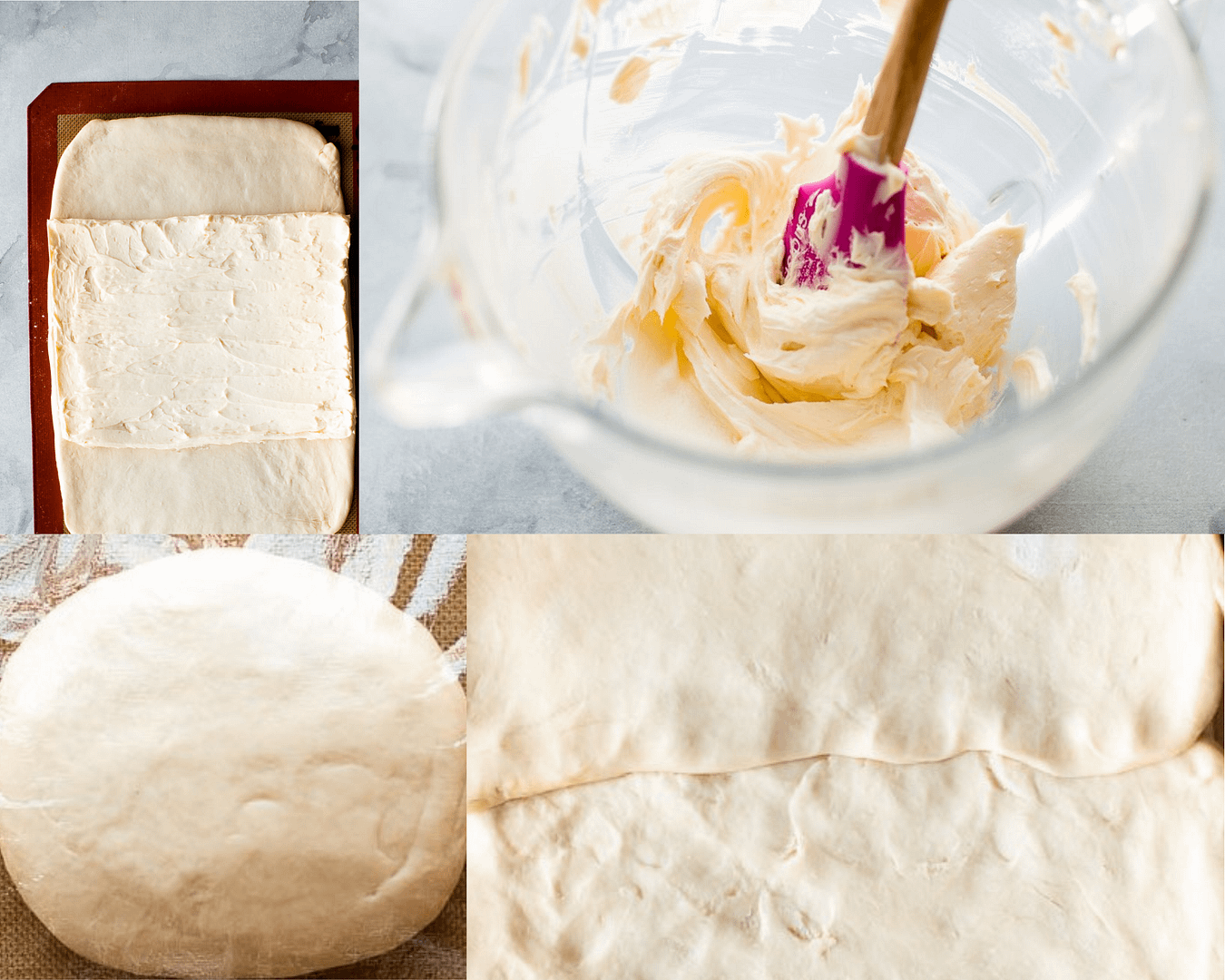
There’s resting time between most steps, which means most of the time is hands off. To help us develop all the layers, croissant dough needs to rest in the refrigerator often. That’s why I call making croissants a project. Do it over a couple days with long breaks between the steps.
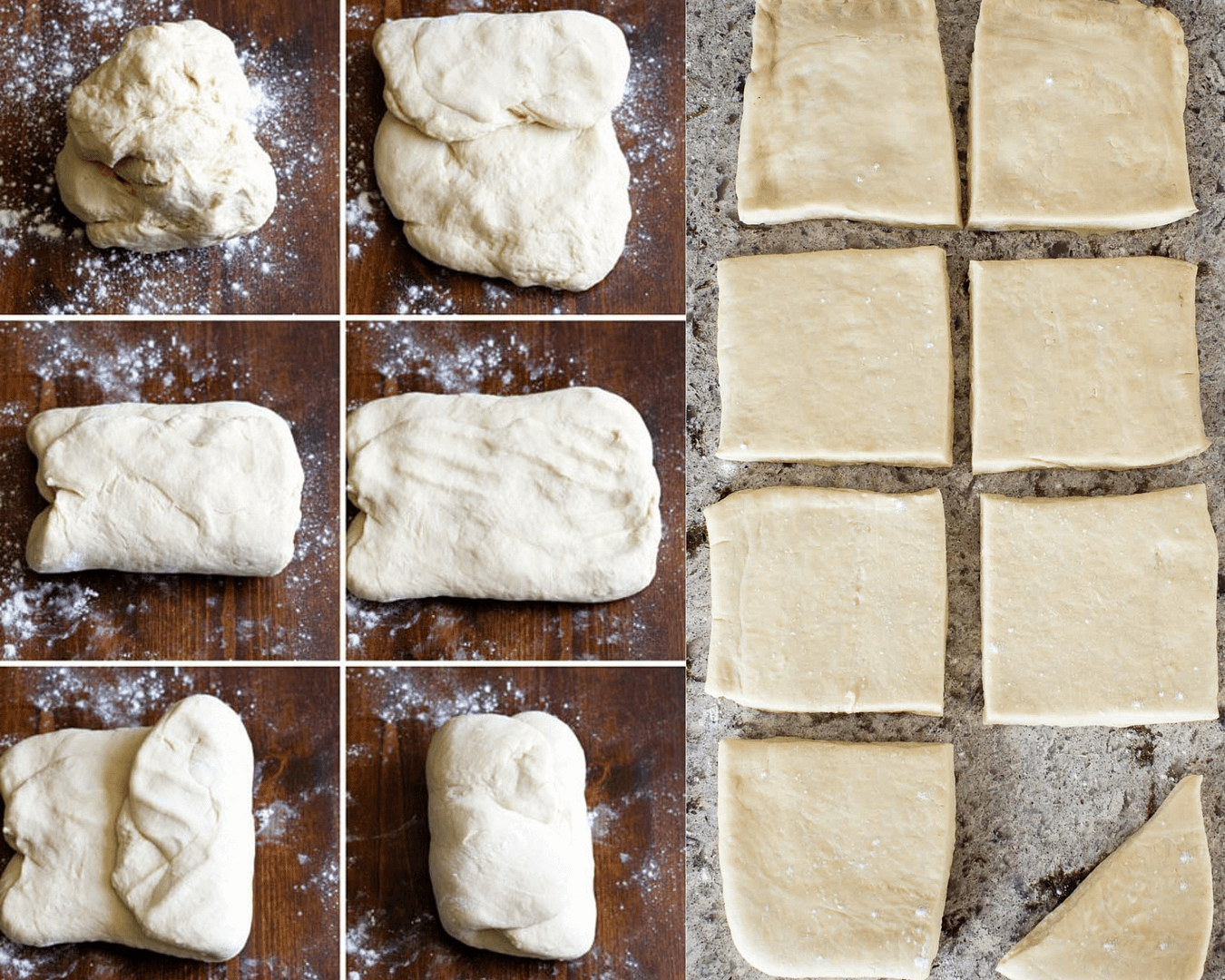
We made the dough, now we’re going to cover it and let it rest in the refrigerator for 30 minutes.
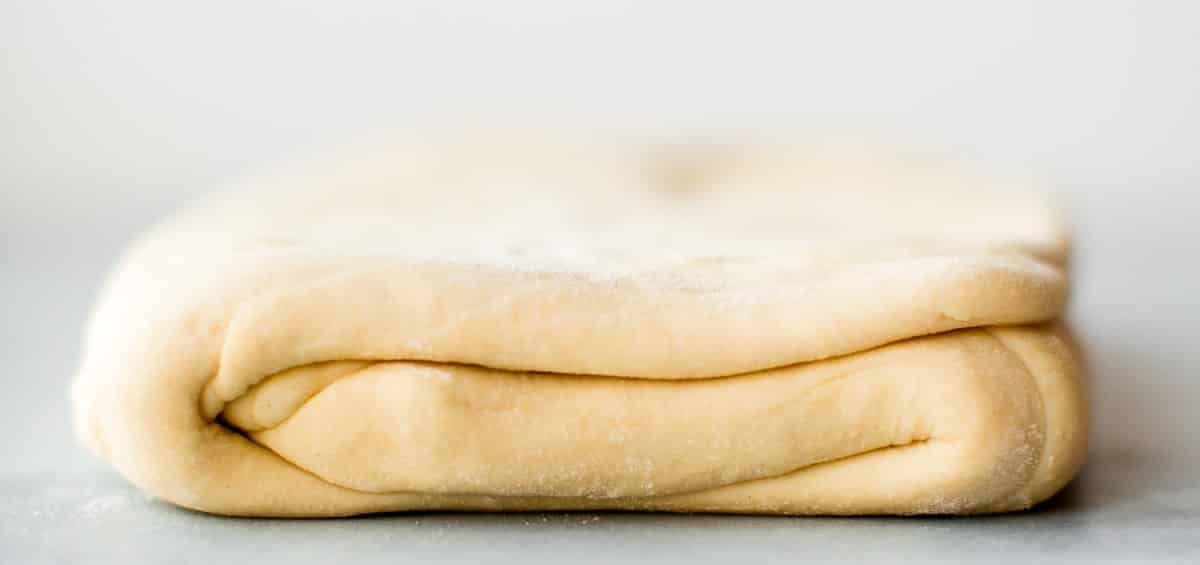
All that rolling out and folding back together? That’s called LAMINATING.
What is Laminated Dough?
Laminating dough is the process of folding butter into dough many times, which creates multiple alternating layers of butter and dough. When the laminated dough bakes, the butter melts and creates steam. This steam lifts the layers apart, leaving us with dozens of flaky airy buttery layers.
- Start with dough, butter layer, dough = 3 layers
- Roll it out and fold it into thirds = 9 layers
- Roll that out and fold it into thirds = 27 layers
- Roll that out one last time and fold it into thirds = 81 layers
So we’re only laminating the dough 3 times, but that gives us 81 layers. When the croissants are rolled up and shaped, that’s one 81 layer dough rolled up many times. So when you bite into a croissant, you’re literally biting into hundreds of layers.

DOUGH
Croissant dough begins with butter, flour, sugar, salt, yeast, and milk. Unlike most yeasted doughs that require warm liquid to activate the yeast, you’re going to use cold milk. The yeast will work its magic later on in the recipe. In the beginning steps of croissants, the dough should always be cold. If, at any point, the dough becomes too warm… stop. Stop what you’re doing and place the dough back in the refrigerator for 20 minutes.
The mixer will beat the dough for about 5 minutes. Stand by your mixer as it works the dough. This dough isn’t particularly heavy, but your mixer will still get a workout.
HOW TO MAKE QUICK AND EASY BUTTER CROISSANTS
- Prepare the dough. Dissolve yeast in water and stir to mix together, then let it sit for 2 minutes. In a large bowl, add flour, sugar and salt. Pour in yeast mixture and whisk until fully combined. Add in some butter and incorporate it into the dough.
- Allow first rising of the dough. Cover with plastic wrap and let it sit at room temperature for 1.5 to 2 hours, until the dough doubles in size.
- Laminate the dough. Place dough on a lightly-floured surface and press gently to squeeze out the air. Roll into a log, and then cut into 12 equal pieces. Take one piece of dough and roll it into a rectangle approximately 6 x 10-inches.
- Apply a generous amount of butter on the dough and spread evenly. Take another piece of dough and roll it out into the same size and stack it on top of the first piece. Spread a layer of butter on top, and repeat to produce a multi-layered dough with alternating layers of dough and butter, ending with a layer of dough.
- Cool down the dough. Wrap the stacked dough with cling film and refrigerate for at least an hour or overnight to cool down completely.
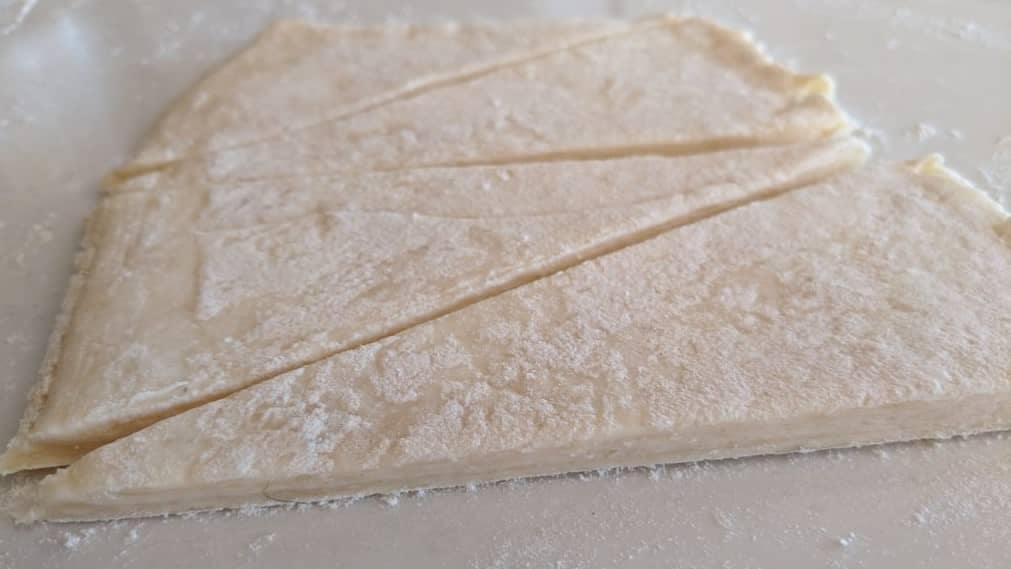
- Shape the dough. Take out the stacked dough and roll it out into a larger rectangle, approximately 10 x 18-inches. Make 3 even horizontal cuts to form 4 smaller rectangles. Cut each of these rectangles in half diagonally to form 8 triangles. Take each triangle and tightly roll it up from the base into a crescent shape. Tuck the tip underneath and place the croissant down onto a parchment-lined baking pan. Repeat with the rest of the dough, placing them 2-inches apart.
- Allow second rising of the dough. Let the croissants rise at room temperature for 1.5 hours, or in a cooler place for 2-3 hours. Once ready, the croissants will almost double in size.
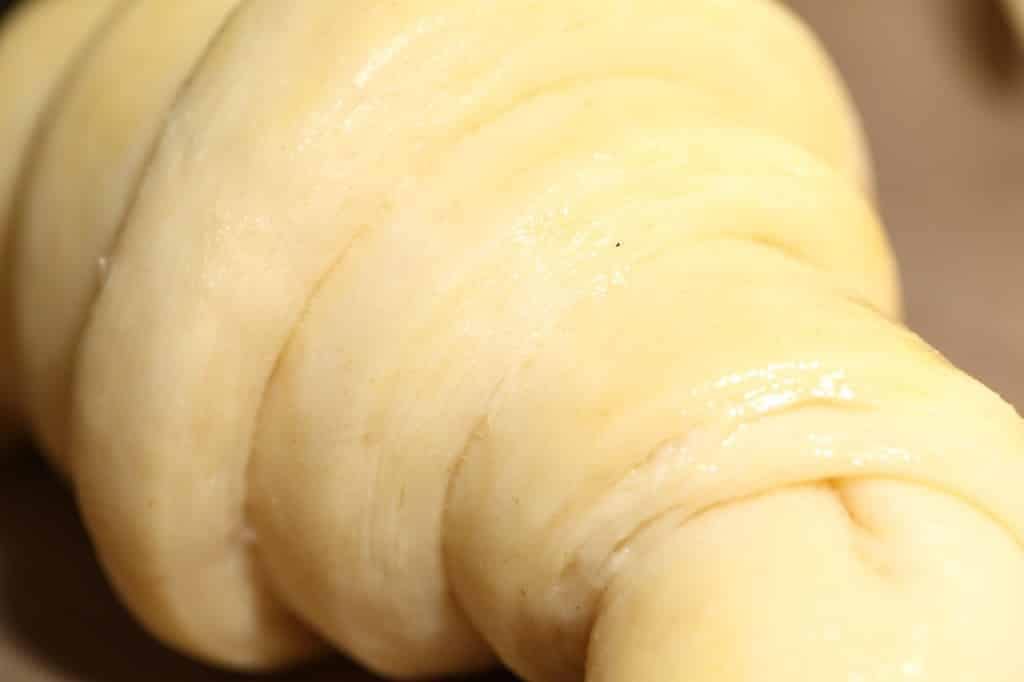
- Bake the croissants. Preheat oven to 425 F. Apply egg wash on each croissant. Bake for 10 minutes, then turn the temperature down to 375 F and continue to bake for another 12 minutes until golden brown.

AFFILIATE LINK
Electric hand Mixers can be very expensive; however if you are on a budget; i will recommend Combo electric hand and stand mixture
TIPS FOR BAKING THE PERFECT CROISSANTS
- Be patient. Making croissants takes time. There is a lot of waiting around time, cooling time, and rolling. The traditional way of making croissants is a multi-day task. Using the beginner’s technique of stacking pieces of dough, you can make beautiful flaky croissants in just a few hours.
- Keep the dough cold. When you are rolling out the stacked and cooled dough, make sure that the dough stays cold to prevent the laminating butter from melting and getting pressed into the dough. If you find that the butter is starting to get soft from the rolling, and is being squeezed out from the edges, then place the dough back into the refrigerator for 20-30 minutes to cool down.
- How to store croissants. Croissants are best and flakiest when served fresh on the day that they are baked. You can store them for up to 3 days in an airtight container or Ziploc bag at room temperature, or in the freezer for up to 3 months. To get them crispy and flaky again, just reheat for a few minutes in the Air fryer using the reheat setting or in the oven at 350 F. You can reheat them straight from the freezer.
Checkout my Soft Butter Danish Cookies recipe
Discover more from Natrecipes
Subscribe to get the latest posts sent to your email.
They look delicious!
Thanks 😊💛. Stay blessed